Tag

FIFA

Browsing

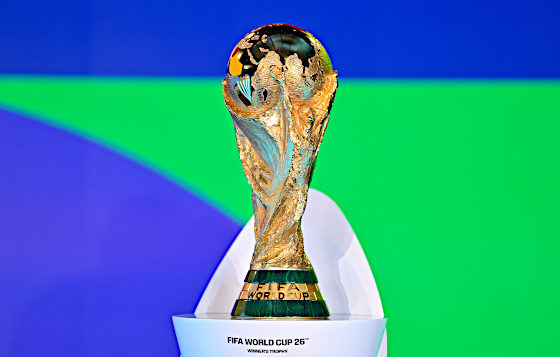
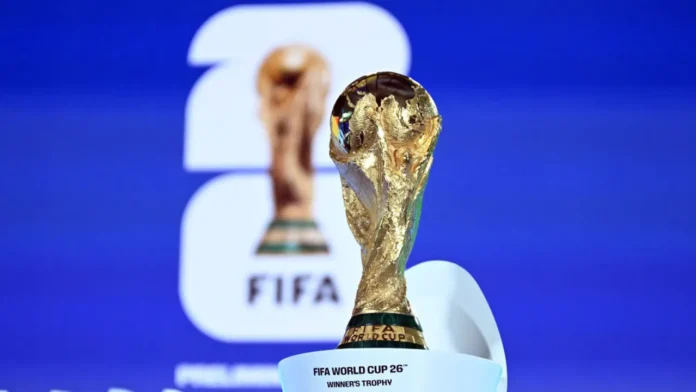
Ahead of the 2026 World Cup, FIFA announced a number of rule modifications intended to expedite games and reduce time-wasting. The changes include replacements, restarts, injury protocols, and the use of VAR during the event, which takes place from June 11 to July 19.

The new regulations stipulate that players who are substituted must exit the field within ten seconds; if they do not, their replacement must wait a minute to join.

Goal kicks and throw-ins are now limited to five seconds, and if they take too long, the other team will get possession. Players who are receiving medical attention on the field are required to leave right away and are only permitted to return after play has restarted for one minute.

VAR oversight will also expand, allowing referees to review incidents involving second yellow cards and clear errors on corner kick decisions, reinforcing accuracy in critical moments.

The 2026 World Cup will be historic in several ways. It will be jointly hosted by the United States, Canada, and Mexico across 16 cities—11 in the U.S., three in Mexico, and two in Canada.

Mexico becomes the first country to host three men’s World Cups, while Canada will host for the first time. The tournament will expand to 48 teams, making it the largest World Cup ever.

The United 2026 bid secured hosting rights over Morocco at the 68th FIFA Congress in Moscow, returning the tournament to its traditional summer schedule after Qatar’s 2022 edition took place in November and December.

New entrants expected to make their debut include Cape Verde, Curaçao, Jordan, and Uzbekistan, while defending champions Argentina aim to retain their title.

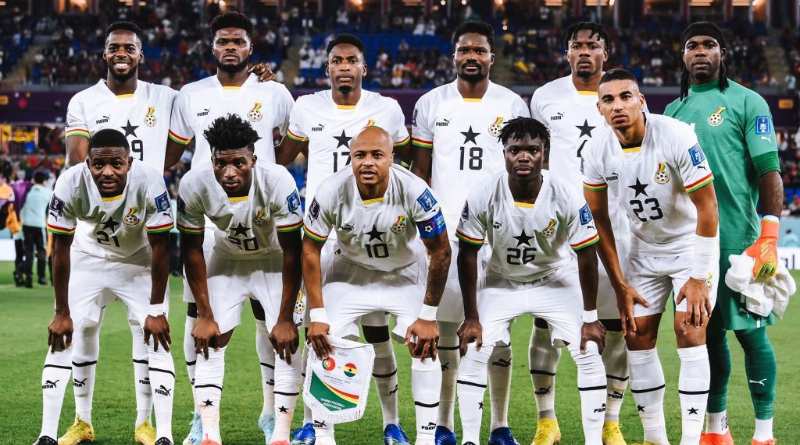
Ghana will compete in its fifth World Cup, beginning its Group L campaign against Panama on June 17, followed by matches against England on June 23 and Croatia on June 27.

FIFA has declared that media representatives and non-rights holders (NRHs) can officially apply for media accreditation for the FIFA World Cup 2026TM.

The FIFA Media Hub is the only platform used to manage the media accreditation process.

A systematic, quota-based procedure will be used due to the extremely high demand. Who can apply, how to apply, and when are all explained in this advise.

Key Dates

Accreditation opens: 26 January 2026

Application deadline: 31 March 2026

Who Can Apply

Media accreditation is available for:

Written press (print and digital)

Photographers

International and national news agencies

Radio and TV non-rights holders (limited)

FIFA Media Partners (rights holders)

FIFA Media Partnerships will be directly responsible for the accreditation of FIFA Media Partners (rights-holding media organisations).

The FIFA Media Partnerships team is in regular contact with the Media Partners and will inform them directly about the accreditation procedure and other accreditation-related matters.

A reference document with tips and guidelines for media accreditation is also available below.

FIFA Media Hub – Mandatory

All applications must be submitted via the FIFA Media Hub.

To apply, you must have:

An approved FIFA Media Hub account

Media Hub accounts are personal and must not be shared.

Accreditation Control Keys & Quotas

Accreditation for written press and photographers is managed via FIFA Member Associations.

Each Member Association receives a limited quota based on:

Previous World Cup participation

Qualification status for FIFA World Cup 2026™

Member Associations distribute control keys to media organisations and freelancers.

Media representatives must contact their FIFA Member Association to request a control key.

Radio and television non-rights holders

Non-rights holders (NRHs) are radio and television companies that do not have media rights for the FIFA World Cup 2026.

NRHs will be able to apply for media accreditation without a control key. We wish to stress that the number of NRH accreditations will be very limited and that the matchday access policies are still to be defined.

For any questions regarding the accreditation of NRHs, please contact nrh@fifa.org.

Host Countries (Canada, Mexico, USA)

Media representatives and freelancers working for organisations based in Canada, Mexico or the United States will follow a process coordinated directly by FIFA. Further information is available on the FIFA Media Hub.

Application & Approval

Applications close on 31 March 2026

All applicants undergo mandatory security check

Accreditation confirmations will be sent starting in March 2026

Media Tickets

Media accreditation does not grant access to matches by default. Accreditation provides access only to the stadium media centre.

Access on matchday to designated media or photo positions, attend press conferences, or access the mixed zone, media representatives must hold a separate, approved media ticket for the specific match.

Without a valid media ticket, stadium entry will be limited, even if accreditation has been approved. Media ticket applications will open shortly after accreditation launches.

Requests must be submitted via the FIFA Media Hub or FIFA Media App

Only accredited applicants may request tickets

At this stage, media tickets can only be requested for group-stage matches.

Media may request a maximum of one match per day

Visas

Media are strongly advised to start their visa application process as early as possible.

Please note that the visa process is not linked to the accreditation process, and media representatives do not need to wait for accreditation approval before applying for a visa.

Please see the Visa Guidelines for further information.

Stay Informed

All official updates, procedures, and FAQs will be published on the FIFA Media Hub. Media representatives are encouraged to check the platform regularly.

For any questions or issues related to your FIFA Media Hub profile or the accreditation process, please contact us via the FIFA Media Hub Contact Form.

FIFA has made the decision to prohibit eight nations from competing in the World Cup.

Reports circulating in international football circles indicate that FIFA is willing to ban eight national teams from the upcoming World Cup for a variety of regulatory and compliance violations, according to a report by Osikani Tv.

Numerous sources assert that the football governing body has completed internal reviews that could result in broad sanctions, even if an official announcement has not yet been made.

The purported bans are said to be related to problems like unresolved financial disputes, governance failures, government meddling in football administration, and transgressions of FIFA’s standards of conduct.

FIFA has maintained a strict stance on political influence in national associations, financial transparency, and adherence to international statutes. Any breach of these standards can result in temporary or indefinite suspension.

FIFA To Ban Eight Countries From Participating At The World Cup

In past instances, countries found to have governments meddling in the operations of their football associations have faced immediate sanctions.

Such bans typically bar the affected national teams from appearing in qualifiers, friendly matches under FIFA oversight, and major tournaments such as the World Cup.

If the recent reports prove accurate, the suspensions could disrupt qualifying campaigns and reshape the landscape of the competition.

While the names of the eight countries have not been officially confirmed, speculation across sports media has pointed to nations that have previously been warned or investigated.

Analysts emphasize that FIFA’s ethics committees and compliance units have expanded monitoring efforts over the last decade to maintain fairness and stability within global football.

FIFA regulations state that suspended associations lose all membership rights until their issues are addressed.

This includes funding restrictions, exclusion from development programs, and disqualification from all FIFA-recognized tournaments at both senior and youth levels.

Clubs from these nations may also be prohibited from taking part in continental competitions, further complicating the domestic impact.

The potential ban is already the subject of debate among football fans and experts.

Some argue that suspensions are necessary to uphold the integrity of the sport, while others believe that harsh punitive measures may punish players and supporters more than the administrators responsible for alleged violations.

If the sanctions move forward, national federations would need to meet specific conditions to regain eligibility.

This could involve changes in leadership, settlement of debts, structural reforms, or demonstrated independence from government influence.

Until FIFA releases a formal statement, participating nations and their supporters remain in uncertainty.

Any suspension will not only affect World Cup preparations but could also influence regional qualifiers, sponsorship deals, and long-term developmental plans.

For now, football communities around the world are closely monitoring FIFA’s next move, aware that the consequences could significantly alter the path to the global tournament.

FIFA Pauses GFA Plan to Expand Executive Council Representation

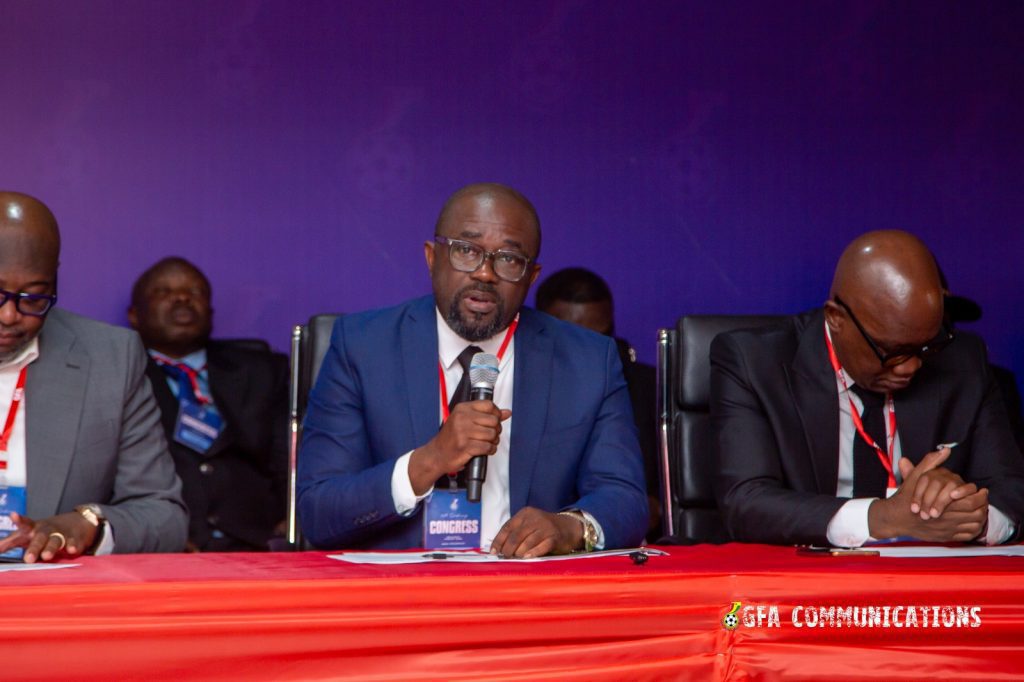
Osikanitv.com has reported that FIFA has temporarily denied the Ghana Football Association’s (GFA) request to increase the number of members on its Executive Council from 12 to 22.

The goal of the proposed modification was to improve representation among Ghanaian football’s many stakeholders as part of a larger revision of the GFA Statutes.

FIFA temporarily rejects GFA proposal to expand Executive Council membership

The plan aimed to add further seats for one representative from constituent organizations like referees, school football, and other related groups, eight remaining Regional Football Association (RFA) chairpersons, and one woman chosen by the Women’s Premier League clubs.

FIFA, however, has recommended against moving forward with the expansion at this time, stating that additional evaluation and a more methodical approach to future major structural changes are required. The international governing body underlined that although inclusion is a worthwhile objective, the timing and procedural alignment need careful consideration.

Only two of the numerous ideas that the GFA made as part of its agenda for law change were accepted by FIFA. In accordance with CAF and FIFA governance rules, the GFA President’s term restriction will be increased from two to three terms. A discrepancy in the current statutes that allowed Executive Council members to serve three terms while limiting the President to two is also fixed by this.

The elected Women’s Representative on the Executive Council will now serve as the 2nd Vice President of the GFA. This aligns with FIFA’s mandate for meaningful female representation and reinforces the GFA’s commitment to gender equity and the strategic advancement of women’s football.

These developments are the result of a three-year-long review process, initiated when the GFA received a wide array of proposed statutory amendments from its membership. In response, the Executive Council formed a Statutes Review Committee, chaired by Dr. Randy Abbey, to oversee the review and harmonization of the proposals.

The committee ensured a broad-based stakeholder consultation, engaging clubs from the Premier League, Division One League, Women’s Premier League and the Regional Football Associations to contribute to the reform dialogue. The consolidated proposals were then submitted to FIFA Governance in collaboration with CAF Governance for evaluation.

Now that FIFA has endorsed two key proposals, the GFA is set to present them for ratification at its upcoming Congress on Tuesday, August 12, 2025.

Fifa

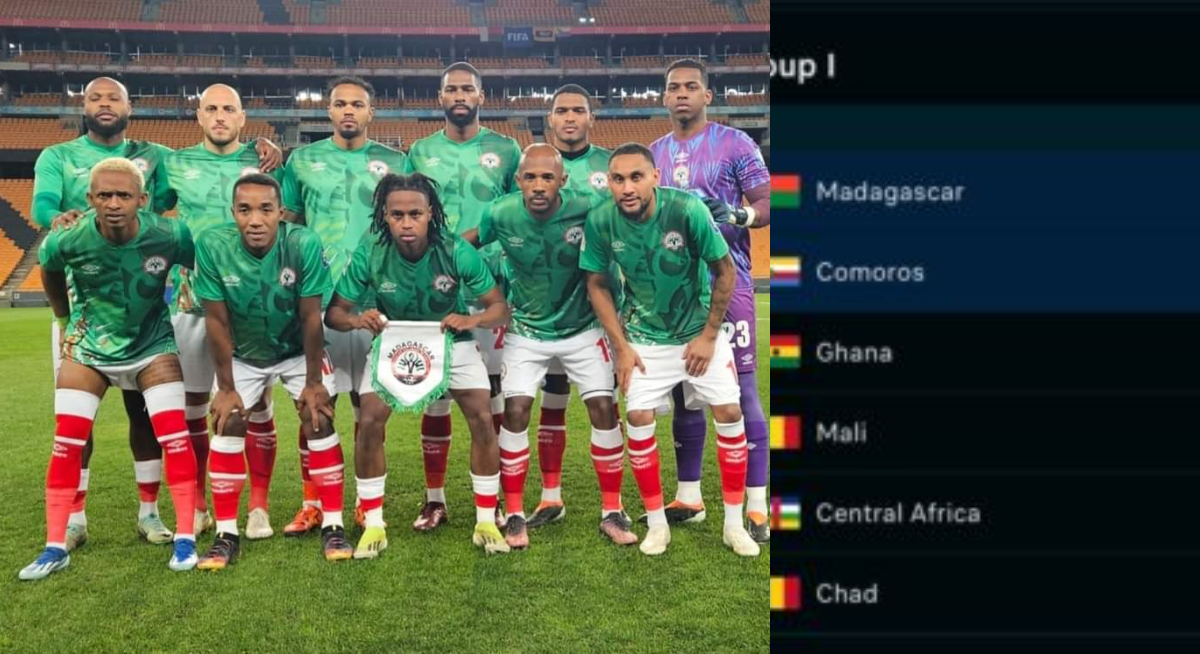
Following the outcomes of Round 3, Group I of the African qualifications for the 2026 FIFA World Cup has opened up.

Ghana’s Black Stars influenced the situation in the group with a hard-fought 2-1 victory over Mali in Bamako.

In that game, the hosts scored and led at halftime, but they were unable to defend and take all three points.

Ernest Nuamah and Jordan Ayew scored goals to lead the Black Stars to a much-needed 2-1 victory at the halftime.

In the other Round 3 games this week, the Central African Republic defeated Chad, increasing their prospects of qualifying for the next round.

Today’s final game in Group I for the third round between Madagascar and the Comoros expanded the group even further.

Madagascar is now second in the group with six points, having defeated the Comoros 2-1.

Madagascar and Ghana in first and second also have six points respectively.

Meanwhile, Mali and the Central African Republic also are on four points each.

Chad after failing to win any of the first three matches in the qualifies sits bottom of the table.

FIFA

Ghana’s Sports Minister, Mustapha Ussif, has stated that the country has received its portion of FIFA money for the 2022 World Cup.

FIFA declared a total prize money pool of $1 billion prior to the event in Qatar, indicating a considerable 29% increase over previous editions. Based on their success in the World Cup, the 32 participating teams received $440 million of this total.

Following Ghana’s early elimination from the tournament, a total of $10.5 million was granted to them, exceeding their initial expectations. The allotment featured a $2.5 million participation fee and a $8 million prize pool.

“The GFA has written to the Ministry that FIFA has transferred the prize money of the 2022 World Cup to the FA,” Minister Ussif confirmed at a press conference on Wednesday in Accra.

While discussing the plans for utilizing the cash, the minister stated that the country’s sports infrastructure is also being improved. He stated that the Ghana Football Association (GFA) has showed interest in improving Prampram’s infrastructure.

Ghana’s debut in the 2022 World Cup was their fourth in the renowned competition. Although the squad had obstacles and was eliminated after the group stage, the allocation of FIFA financing is considered as a boost for future sports development in the country.